
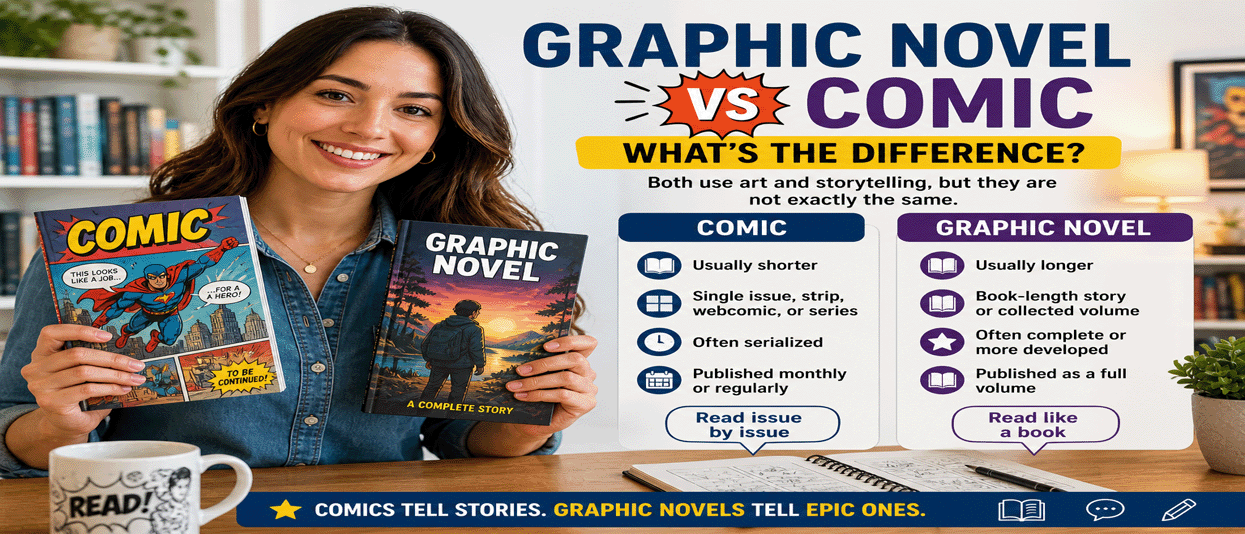
Many readers use the words graphic novel and comic as if they mean the same thing. They are closely related, but they are not always exactly the same.
Both use sequential art, panels, speech bubbles, captions, and visual storytelling. The main difference usually comes down to length, format, story structure, and how the work is published.
What Is a Comic?
A comic is a visual story told through panels, artwork, and text. Comics are often published in shorter installments, such as single issues, strips, webcomics, or serialized chapters.
Comics can be funny, serious, dramatic, educational, scary, romantic, or action-packed. The word “comic” does not mean the story has to be humorous.
What Is a Graphic Novel?
A graphic novel is a longer visual story, usually published as a complete book or collected volume. It may tell one complete story from beginning to end, or it may collect several comic issues into one larger edition.
Graphic novels often feel more like traditional novels because they usually have a larger story arc, deeper character development, and a book-style format.
Main Difference Between Graphic Novels and Comics
| Category | Comic | Graphic Novel |
|---|---|---|
| Length | Usually shorter | Usually longer |
| Format | Single issue, strip, webcomic, or series | Book-length story or collected volume |
| Story | Often serialized | Often complete or more developed |
| Reading Style | Read issue by issue | Read like a book |
| Publishing | Often released monthly or regularly | Often released as a full volume |
Are Graphic Novels Comics?
Yes. A graphic novel is a type of comic, but not every comic is a graphic novel.
Think of it this way: all graphic novels use comic-style storytelling, but graphic novels are usually longer, more complete, and published in book form.
Why People Confuse the Two
The confusion happens because both formats use the same storytelling tools:
- Illustrated panels
- Speech balloons
- Caption boxes
- Sequential storytelling
- Characters and scenes shown visually
The difference is not the art style. It is mostly how the story is structured, packaged, and read.
Examples of Comics
Comics can include:
- Single comic book issues
- Sunday newspaper comic strips
- Webcomics
- Serialized superhero comics
- Short digital comics
Examples of Graphic Novels
Graphic novels can include:
- Original book-length illustrated stories
- Collected comic book story arcs
- Graphic memoirs
- Historical graphic novels
- Educational graphic nonfiction
Which One Should Beginners Read First?
If you are new to visual storytelling, graphic novels are often easier to start with because they usually provide a complete reading experience. You can read one book and understand the full story.
Comics are great if you enjoy ongoing adventures, monthly issues, short episodes, or following characters over time.
Why Graphic Novels Feel More Like Books
Graphic novels often include longer plots, stronger themes, deeper character arcs, and more polished book design. They may be sold in bookstores, libraries, schools, and online book platforms.
This makes graphic novels popular with readers who want the emotional depth of a novel combined with the visual power of comics.
Why Comics Are Still Powerful
Comics are fast, flexible, and exciting. They can tell short jokes, long adventures, superhero battles, horror stories, romance episodes, educational lessons, or daily life moments.
Because comics can be serialized, readers often build a long-term relationship with characters and worlds.
Final Thoughts
The difference between a graphic novel and a comic is simple: comics are the broader category, while graphic novels are usually longer, book-style comics with more complete stories.
If you enjoy visual storytelling, you do not have to choose one over the other. Comics and graphic novels both offer powerful ways to experience art, emotion, action, humor, fantasy, history, and imagination.
Graphic Novels Free Related Articles