
Graphic Novel vs Comic Book vs Manga: What’s the Difference?
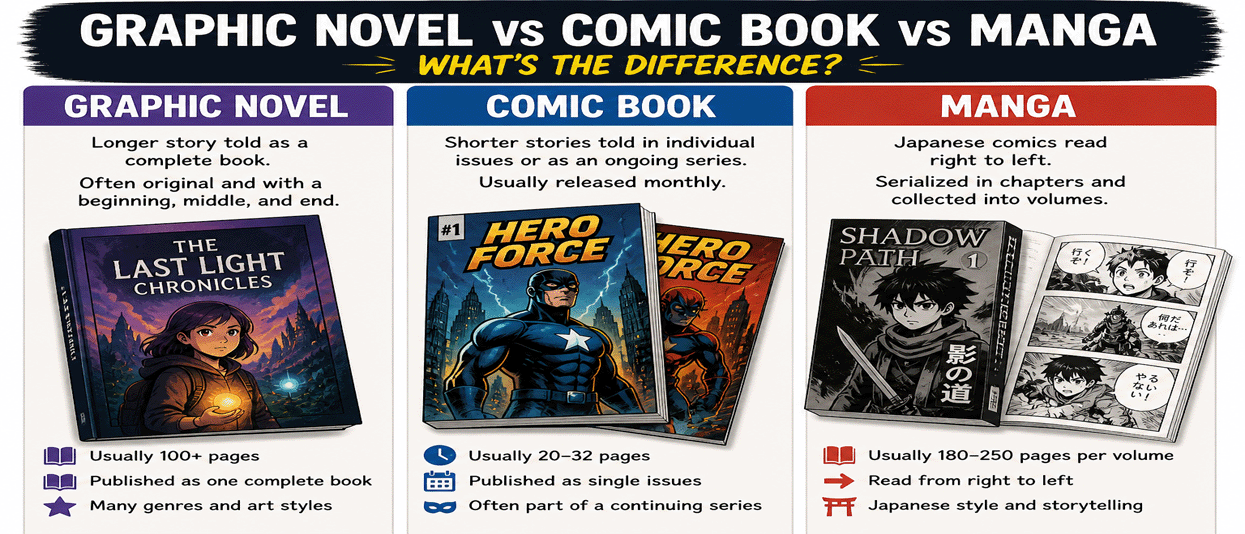
Graphic novels, comic books, and manga all use visual storytelling, but they are not exactly the same. Each format uses panels, artwork, dialogue, characters, and page layouts to tell a story, but they often differ in length, publishing style, reading direction, and cultural origin.
If you are new to illustrated stories, this guide will help you understand the difference between a graphic novel, a comic book, and manga.
What Is a Graphic Novel?
A graphic novel is a longer story told through sequential art. It usually feels like a complete book, with a beginning, middle, and end.
Graphic novels may be original stories, collected comic issues, memoirs, nonfiction books, fantasy adventures, historical stories, or educational books.
Example: A 180-page illustrated mystery story published as one complete volume would usually be called a graphic novel.
What Is a Comic Book?
A comic book is usually a shorter illustrated story released as a single issue or part of an ongoing series. Comic books are often published monthly or in regular installments.
Comic books may feature superheroes, horror stories, sci-fi adventures, fantasy worlds, comedy, romance, crime, or slice-of-life stories.
Example: A 24-page superhero issue that continues next month is usually called a comic book.
What Is Manga?
Manga refers to Japanese comics and graphic storytelling. Manga is often published in black and white, serialized in chapters, and later collected into volumes.
Many manga books are read from right to left, which may feel unusual at first for readers used to Western comics.
Example: A Japanese fantasy series published in multiple black-and-white volumes and read right to left is manga.
Quick Comparison Table
| Category | Graphic Novel | Comic Book | Manga |
|---|---|---|---|
| Length | Usually longer | Usually shorter | Varies by volume or chapter |
| Format | Book-length story or collected edition | Single issue or serialized series | Serialized chapters collected into volumes |
| Origin | Worldwide | Worldwide, often associated with Western comics | Japan |
| Reading Direction | Usually left to right | Usually left to right | Often right to left |
| Common Style | Many different art styles | Bold, serialized visual storytelling | Often black and white with manga-style pacing |
| Best For | Complete stories and deeper arcs | Ongoing adventures and monthly reading | Long-running series, emotional arcs, and Japanese storytelling |
Are Graphic Novels and Comic Books the Same?
They are related, but not always the same. A graphic novel is usually longer and published in book form. A comic book is usually shorter and often part of a continuing series.
However, many graphic novels are collections of comic book issues. For example, several single comic issues may be gathered into one trade paperback or graphic novel collection.
Is Manga a Graphic Novel?
Manga can be considered a type of comic or graphic novel, depending on format. A single manga chapter may feel like a comic issue, while a collected manga volume may function like a graphic novel.
The biggest difference is that manga comes from Japanese comic tradition and often has its own reading direction, pacing, artwork style, and publishing culture.
Main Differences Explained Simply
- Graphic novel: Usually a longer illustrated book.
- Comic book: Usually a shorter issue or serialized story.
- Manga: Japanese comics, often read right to left.
Which One Should Beginners Read First?
If you want a complete story, start with a graphic novel. If you like ongoing characters and cliffhangers, start with comic books. If you enjoy anime-style storytelling, emotional character arcs, or Japanese series, start with manga.
Popular Genres in All Three Formats
- Action and adventure
- Fantasy
- Science fiction
- Superheroes
- Horror
- Romance
- Mystery
- Memoir
- Slice of life
- Historical fiction
Why These Formats Are So Popular
Graphic novels, comic books, and manga are popular because they combine the power of pictures with the emotion of storytelling. Readers can see characters react, watch action unfold, and experience scenes visually.
These formats are especially powerful for readers who enjoy cinematic storytelling, expressive characters, fast pacing, and imaginative worlds.
Final Thoughts
The difference between a graphic novel, comic book, and manga mostly comes down to format, length, origin, and reading style.
A graphic novel is usually a longer illustrated book. A comic book is usually a shorter serialized issue. Manga is Japanese comic storytelling, often read from right to left and collected into volumes.
No matter which format you choose, all three offer exciting ways to experience art, story, emotion, and imagination.
Graphic Novels Free Related Articles
Graphic Novels and Anime: How Visual Storytelling Connects Two Powerful Art Forms
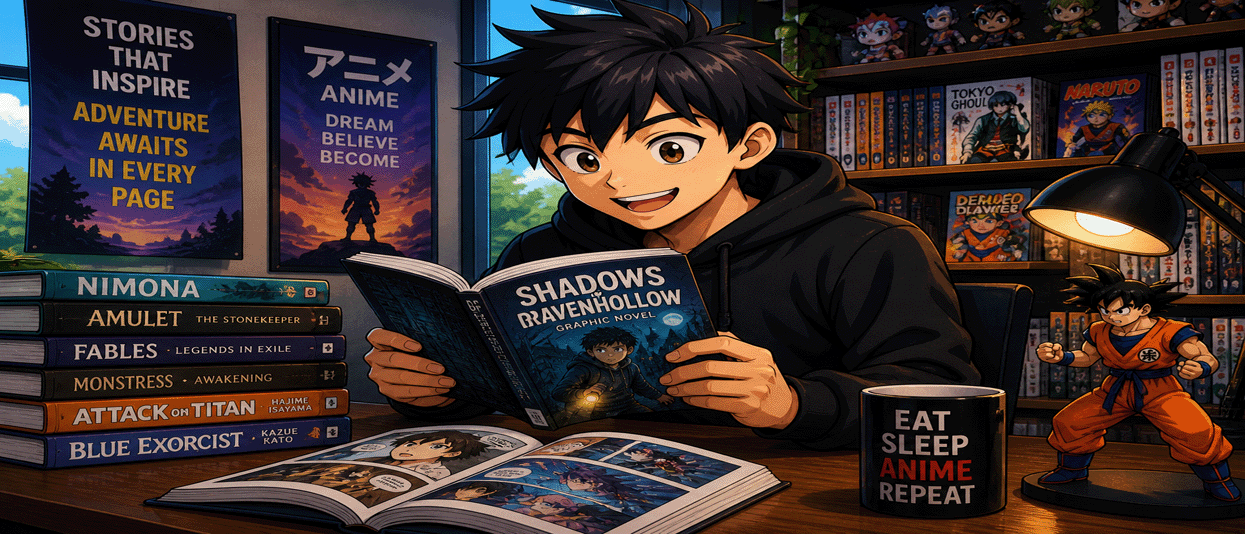
Graphic novels and anime are two of the most popular forms of visual storytelling in the world. One is read on the page. The other comes alive through animation. But both use art, emotion, character design, action, pacing, and dramatic storytelling to pull audiences into unforgettable worlds.
If you love anime, there is a good chance you will also enjoy graphic novels, manga, webcomics, and anime-inspired comics. They share many of the same storytelling tools and appeal to readers who love bold characters, emotional journeys, fantasy worlds, and cinematic action.
What Is the Connection Between Graphic Novels and Anime?
Anime is animated storytelling, often from Japan. Graphic novels are book-length stories told through sequential art. Manga, which is Japanese comic storytelling, often becomes the source material for anime series and movies.
This means many anime fans discover graphic novels through manga, and many graphic novel readers become anime fans because both formats deliver strong visual stories.
Manga vs Graphic Novels
Manga is a type of comic or graphic novel from Japan. It is usually read from right to left and often published in serialized chapters before being collected into volumes.
Graphic novels are broader. They can include American comics, European comics, indie comics, memoirs, fantasy stories, superhero books, historical stories, and manga-style works.
| Category | Manga | Graphic Novel |
|---|---|---|
| Origin | Japan | Worldwide |
| Reading Direction | Often right to left | Usually left to right |
| Style | Anime-influenced or Japanese comic style | Many different art styles |
| Format | Serialized chapters and volumes | Single books, collections, or series |
Why Anime Fans Love Graphic Novels
- Emotional characters: both formats focus on expressive faces, big choices, and personal growth.
- Strong visual action: fight scenes, chase scenes, magic, and movement are easy to imagine.
- Big worlds: fantasy kingdoms, future cities, supernatural schools, and space adventures are common.
- Ongoing stories: many graphic novels and manga volumes build long character arcs.
- Unique art styles: readers can find everything from cute slice-of-life art to dark cinematic illustration.
Popular Genres for Anime-Style Graphic Novels
1. Fantasy
Fantasy graphic novels often include magic, kingdoms, monsters, chosen heroes, enchanted weapons, and epic quests.
2. Supernatural
These stories may include ghosts, demons, curses, spirits, haunted houses, magical powers, or secret worlds.
3. Action and Adventure
Action-driven graphic novels are perfect for anime fans who enjoy battles, missions, rivalries, training arcs, and heroic journeys.
4. Romance
Romance graphic novels and manga-style comics often focus on emotion, friendship, school life, longing, comedy, and personal growth.
5. Slice of Life
Slice-of-life stories explore everyday moments, friendships, family, school, work, humor, and quiet emotional lessons.
6. Sci-Fi
Sci-fi graphic novels may include robots, space travel, cyberpunk cities, artificial intelligence, future wars, and alternate realities.
Anime-Inspired Graphic Novel Techniques
Creators who want an anime feel in their graphic novels often use special visual techniques.
- Large expressive eyes
- Dramatic close-ups
- Speed lines during action scenes
- Emotional reaction panels
- Stylized backgrounds
- Big visual reveals
- Character transformation moments
- Strong chapter endings or cliffhangers
How Manga Influences Modern Graphic Novels
Manga has influenced creators around the world. Many modern graphic novels now use manga-inspired pacing, facial expressions, character designs, action lines, and emotional storytelling.
This influence is especially strong in webcomics, young adult graphic novels, fantasy comics, and creator-owned digital stories.
Best Ways to Find Graphic Novels for Anime Fans
- Search for “anime-inspired graphic novels.”
- Look for manga-style webcomics.
- Use library apps like Hoopla or Libby.
- Browse indie comic platforms.
- Explore fantasy, supernatural, and romance graphic novels.
- Check creator websites for free preview chapters.
Can Graphic Novels Become Anime?
Yes. Many anime series are based on manga, light novels, games, or comics. A strong graphic novel with memorable characters, a unique world, and cinematic storytelling can feel like it is ready for animation.
For creators, this means graphic novels can be used as visual proof of concept for animated shows, short films, or web series.
Tips for Creating an Anime-Style Graphic Novel
- Build characters with clear goals and emotional wounds.
- Use strong facial expressions and body language.
- Create dramatic panel pacing for action scenes.
- Design a unique world with recognizable visual rules.
- End chapters with emotional hooks or cliffhangers.
- Balance quiet character moments with exciting visuals.
Whether you are an anime fan looking for your next great read or a creator hoping to build an anime-inspired story, graphic novels offer a powerful way to experience bold characters, cinematic action, and emotional storytelling on the page.
Graphic Novels Free Related Articles